

What a Bookkeeper Actually Does
Worth being precise, because the job is narrower than the word suggests, and the confusion with accounting is what makes it look harder than it is.
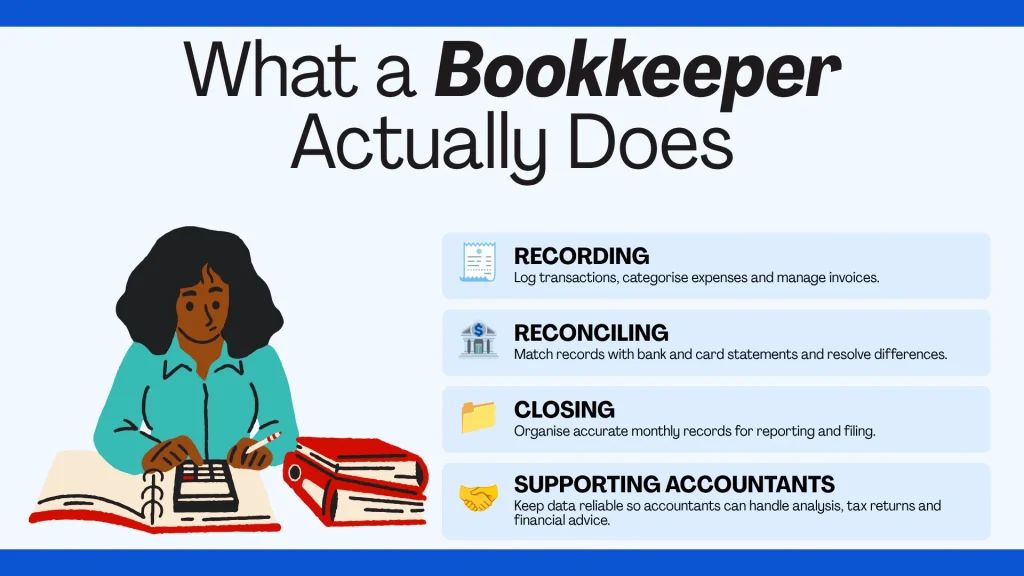
Recording. Entering transactions, categorising expenses, matching receipts, raising and sending invoices, chasing unpaid ones.
Reconciling. Matching the books against bank and credit card statements until they agree, then explaining the differences that remain.
Closing. Producing a tidy set of records each month that someone else can report or file from.
Not interpreting, and not filing. Financial statements anyone relies on, tax returns, and advice on structure belong to an accountant, often one holding a credential with legal weight. A bookkeeper makes the data trustworthy. An accountant draws conclusions from it.
That boundary is the good news. The part requiring certification is the part you are not doing.
The Sequence
Week one. Two free certifications
Not to prove skill. To exist to whatever filters applications before a human reads them.
- QuickBooks ProAdvisor. Free. The most widely used accounting platform among US small businesses, which is where most remote bookkeeping demand sits.
- Xero Advisor. Free. Covers the other half of the market, and the two together make your profile searchable against most job specs.
Do both, not one, and stop at two. A third certification in an unrelated tool reads as someone collecting badges rather than building toward a role.
Week two. Learn the US conventions, not accounting theory
This is where most people waste months. You do not need to study accounting as a discipline. You need to know how US small business books are conventionally structured, because that is what the work consists of.
Specifically: what a chart of accounts looks like and why it is organised that way, the difference between cash and accrual basis in practical terms, what undeposited funds are and why they cause problems, how sales tax liability is tracked, and what a bank reconciliation is actually proving.
Each of those is a short explanation rather than a course. Understanding why reconciliation matters is a different thing from being able to pass an accounting exam, and employers screen for the first.
Weeks three and four. One real set of books
Find a small business, a community organisation, a church, a market stall, or a relative’s company, and offer to clean up or set up one thing. Not ongoing help. One defined piece of work.
Reconcile three months. Rebuild a chart of accounts that grew by accident. Set up invoicing that is currently done in a notebook. Then keep a record of what the situation was, what you decided, and what changed.
The record matters more than the result. An employer cannot verify that you are accurate. They can read two paragraphs explaining that the previous categorisation mixed owner draws with expenses, what you did about it, and what you flagged because you were not certain. That is the whole thing being assessed.
Week five onward. Apply selectively
Fifteen considered applications beat two hundred generic ones. Lead with the certifications and the piece of work, name the software you know, and state what you are not yet confident doing. The last part reads as experience rather than weakness, because every employer has been burned by someone who claimed everything.
You can see what employers are actually asking for by reading current listings, which is the cheapest research available. Browse open roles to see the software and experience that appear repeatedly.
What Employers Screen For, In Order
| Stage | What is checked | What passes |
|---|---|---|
| Filter | Software and certifications | QuickBooks or Xero certification, named explicitly |
| First read | Your written message | Clarity. Short sentences. Answering what was asked. |
| Shortlist | Evidence of real books | One documented cleanup or setup, not a list of claims |
| Test task | Judgement on messy data | Flagging what you were unsure about rather than guessing silently |
The fourth stage is where most candidates are actually lost, and it is not a knowledge test. Given a set of transactions where three are ambiguous, the person who categorises all of them confidently scores worse than the person who categorises twenty-seven and asks about three. Silent guessing is the thing employers are screening against, because it is what makes books untrustworthy.
Create a profile on the candidate portal, and companies search for you rather than the other way round, which changes what your profile has to do.
What to Skip
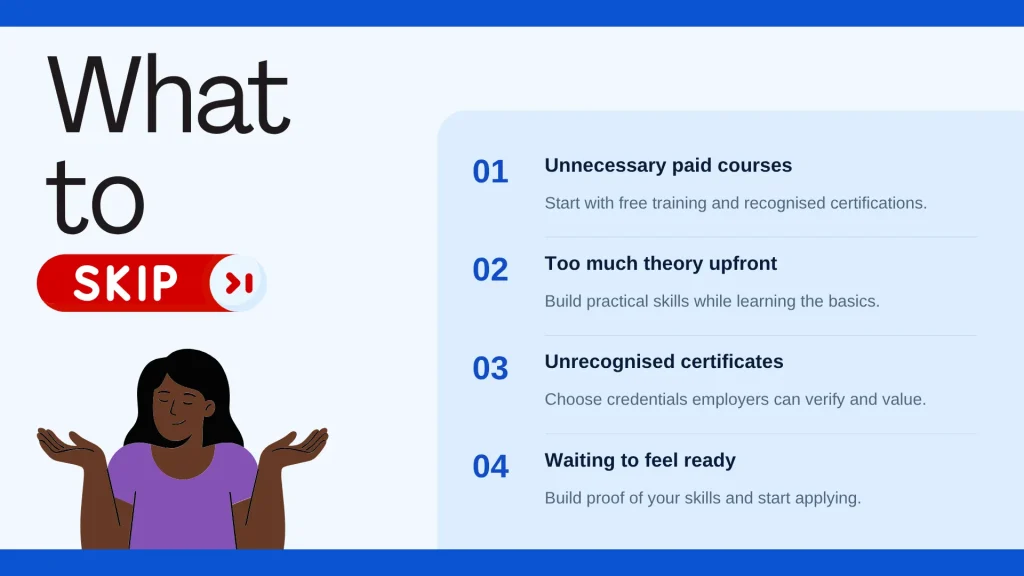
Paid bookkeeping courses. The certifications employers screen for are free. Paid programmes sell structure, which has real value if you need it, but they do not produce a credential anyone hiring recognises.
Accounting theory before practice. Debits and credits are worth understanding and are not what the job consists of. Learn the software and the conventions first. Theory makes more sense afterwards anyway.
A bookkeeping certification from a provider nobody has heard of. If the certificate is issued by the course seller rather than by the software vendor, it is not verifiable and does not pass a filter.
Waiting until you feel ready. Two certifications and one documented cleanup is enough to apply. Nobody feels ready, and the test task is where you find out what you actually need to learn.
Where the Work Is
US small businesses are the bulk of remote bookkeeping demand, because QuickBooks and Xero dominate that market and the work is entirely software-based. Many are hiring for recording and reconciliation rather than for accounting, which is the distinction that makes this role accessible.
Three routes, and they treat you differently. Freelance marketplaces have volume and price by competitive bidding, which pushes rates down and takes a share. General job boards rarely filter for international candidates. Talent platforms vet once and then make you visible to companies hiring specifically for remote roles.
Pavago is free for candidates permanently, and you keep your full rate, with nothing deducted from what the company pays you. Browse your region: South Asia, Southeast Asia, Africa, Europe, or LATAM. You can also search by country: Poland, Romania, Ukraine or Bulgaria.
If you want to understand what clients are evaluating when they hire for this role, our comparison of bookkeeping roles covers how employers distinguish recording work from reconciliation and interpretation.
Frequently Asked Questions
Do I need a degree to become a bookkeeper?
No. There is no licence requirement and no mandatory qualification. The certifications employers screen for, QuickBooks ProAdvisor and Xero Advisor, are free and take days. What you need is software fluency, familiarity with US book conventions, and one piece of documented real work.
How long does it take to become a bookkeeper?
Four to six weeks to be employable at entry level if you follow the order: certifications first, conventions second, one real set of books third, applications fourth. Longer if you study accounting theory before touching software, which is the most common detour.
Is bookkeeping the same as accounting?
No. Bookkeeping records and reconciles. Accounting interprets, reports and files, often requiring a credential with legal weight. The part requiring certification is the part a bookkeeper does not do, which is why the role is accessible without a degree.
Should I pay for a bookkeeping course?
Generally no. The certifications that pass employer filters are free and issued by the software vendors. A certificate from a course provider is not verifiable by anyone hiring. Paid courses sell structure rather than credentials.
What software should I learn first?
QuickBooks Online, then Xero. Between them, they cover most US small business demand, and both offer free certification. Learning a third platform before you have a role adds little.
Get vetted once. Let companies find you.
Free for candidates, always. You keep your full rate, with nothing deducted from what the company pays you. Companies search the pool and message you directly.